
Coverage & Network Partners
Which partner carriers we attach to, which technologies they run, and where coverage genuinely thins out. Published because being told in advance is worth more than an optimistic map.
Ask about this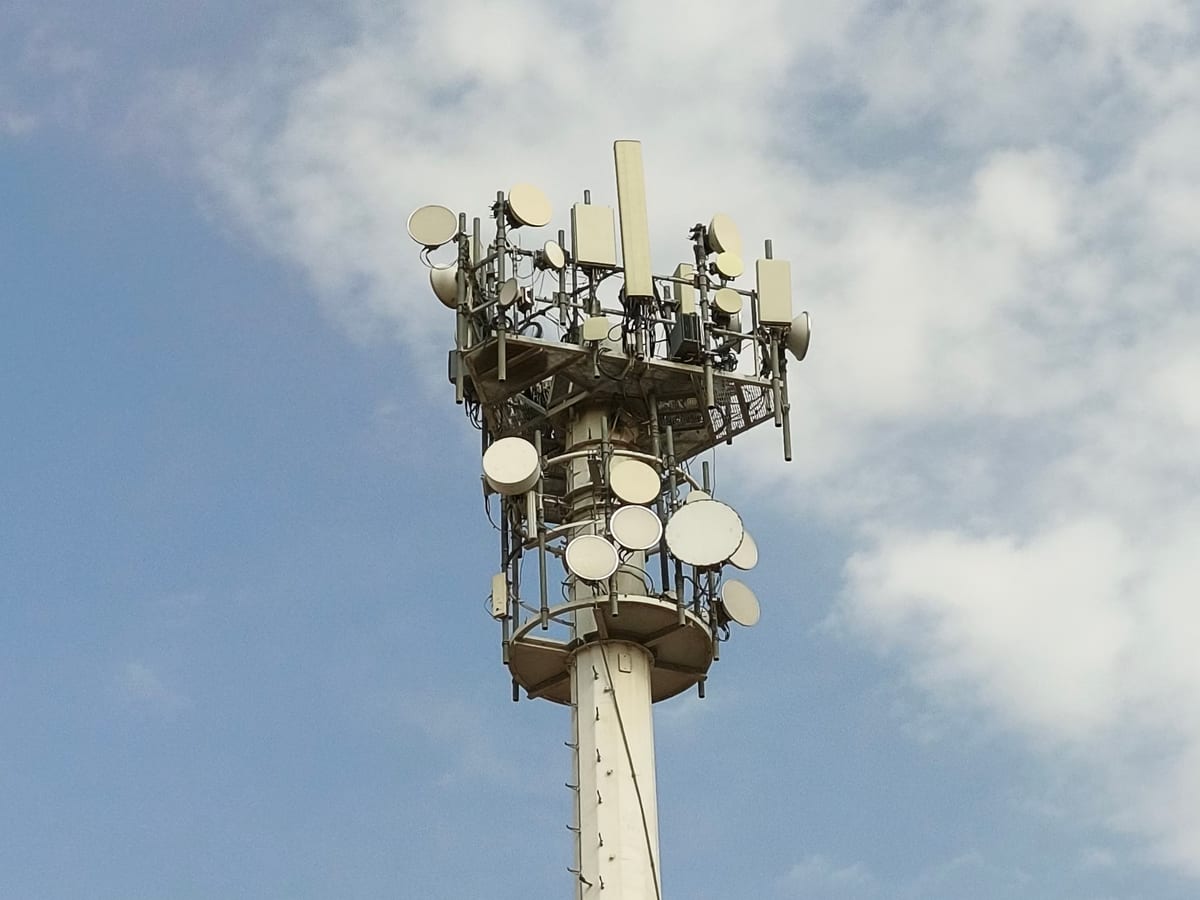
Every eSIM reseller has a coverage map and almost all of them are green. Ours is not a map, it is a list — of regions, of the partner networks operating in each market, and of the places where members have reported that the experience does not match the theory. That is a less impressive marketing asset and a far more useful document.
Coverage exists because of roaming agreements. We hold wholesale arrangements with mobile network operators and platform partners; those arrangements permit profiles we issue to attach to their radio networks in defined markets. Nothing about that gives us control over the radio itself. Where the partner has built well, the experience is good; where they have not, no amount of provisioning cleverness will fix it.
What determines what you actually get
- The partner's own network in that market — how densely it is built, and whether you are on their primary or a secondary tier.
- Your handset's bands. A phone bought for one continent may lack the bands a network on another continent leans on, which shows up as weak signal in the same spot where a local's phone is fine.
- Time and load. A cell that is quick at ten in the morning can be congested at nine in the evening. This is the largest source of the variability people report.
- Geography. Valleys, dense old-city masonry, underground transport and coastal stretches all behave differently, and none of it is visible on a national map.
- Roaming tier. Some agreements grant access to a subset of a partner's spectrum rather than all of it. Where we know this to be the case, we say so.
Technologies we sell against
Every market we sell into supports LTE, and that is the baseline we design plans around. 5G is available where the partner network has deployed it and where your handset supports the relevant bands — in non-standalone deployments the phone still anchors to an LTE carrier, so a 5G indicator is not by itself evidence of a better connection. Some markets have retired 3G entirely, which matters if you are travelling with an older device that expected to fall back to it.
Voice over LTE is irrelevant to our plans, because the profiles are data-only. There is no local number, no circuit-switched voice and no SMS. Voice happens over data applications, and it works about as well as the data underneath it.
Where a partner agreement changes in a way that materially reduces coverage on a plan you already hold, we will tell you and offer either a replacement plan or a pro-rata refund of the unused portion. That is written into our Terms and Conditions, not just into a support script.
Where we are honest about gaps
Africa is our most uneven region. Coverage in and around the major cities of the markets we sell is generally serviceable; outside them it varies enormously between operators, and a plan that works well in one city can be frustrating three hours away. The Middle East has fewer regional pass options than Europe because the underlying agreements are narrower, so we usually recommend local profiles there. Parts of rural Asia-Pacific depend heavily on which band your handset supports.
None of this is a reason not to sell in those markets. It is a reason to describe them accurately, so that you can decide whether to carry a backup — a local SIM bought on arrival, or a second profile from a different partner — before it becomes urgent.
Carrying a backup where it matters
For most trips a single profile is enough. For the ones where connectivity is genuinely load-bearing — a shoot, a conference talk, a client migration — a second path on a different radio network is worth the small cost. That can be a local physical SIM bought on arrival, or a second profile whose partner in that market is not the same as your first. The point is diversity of radio network, not of provider branding.
How the list is maintained
Partner lists are updated when agreements change. Field reports come from members through chapter channels and support tickets, and they are the reason several of our coverage notes exist at all — a member in a specific city noticing that a particular partner has degraded is usually faster than any monitoring we could run ourselves. If you find something we have described wrongly, tell us at support@digitalroamink.com and we will correct it.
About coverage & network partners
Why does my phone show poor signal when locals have full bars?
Almost always band support. Handsets sold for one region sometimes lack the bands a network elsewhere relies on. The coverage note for each market lists the bands that matter most.
Can I choose which partner network I attach to?
On most handsets you can select a network manually in settings, though only among those your profile is entitled to. Automatic selection is usually better, but manual selection is worth trying when one network is congested.
Do you monitor coverage yourselves?
We monitor provisioning and attachment success. Actual radio quality in a given street is reported by members, which is why chapter channels feed directly into these pages.
Tell us where you are going and we will tell you what fits
Written answers, usually within one business day, from people who can read a provisioning log rather than a script.